If We Only Dance With 'Advanced' Dancers, What Will We Miss?
Honest Observation
For as long as we’ve been dancing, this question has been around: why do so many of us mostly dance with partners who feel “advanced” or familiar?
We heard it when we were beginners, we’ve talked about it with friends, and we’ve felt it in ourselves too — wanting to push, to feel “on”, or to avoid awkward moments.
Lately, we’re revisiting this same old topic through what we’ve been learning about African American social dance culture, and it’s starting to change how we understand it.
Where This Comes From?
In many scenes today, we grow up with levels, auditions, competitions, and social media clips that highlight the flashiest dancers.
In that environment, it feels natural to think: “If I want to grow, I should dance with the most advanced people.”
For us, this reflects a wider culture that focuses on performance, individual achievement and visibility, which sits quite differently next to the African American roots of Blues, where social dancing grew out of everyday life under racism and economic pressure, and carried other meanings beyond standing out.
Social Roots
From what we’ve read and been told by dancers, musicians, and writers in this culture, Blues grew inside African American communities — in homes, churches, rent parties, juke joints, barbershops, ballrooms and neighborhood gatherings.
These spaces were used to share joy and grief, to release tension from daily life, and to stay connected and human in the middle of an unequal society.
In that context, the question was not only “who is the best dancer?” but also “how do we hold each other in this music, right now?”
Different Levels, Same Floor
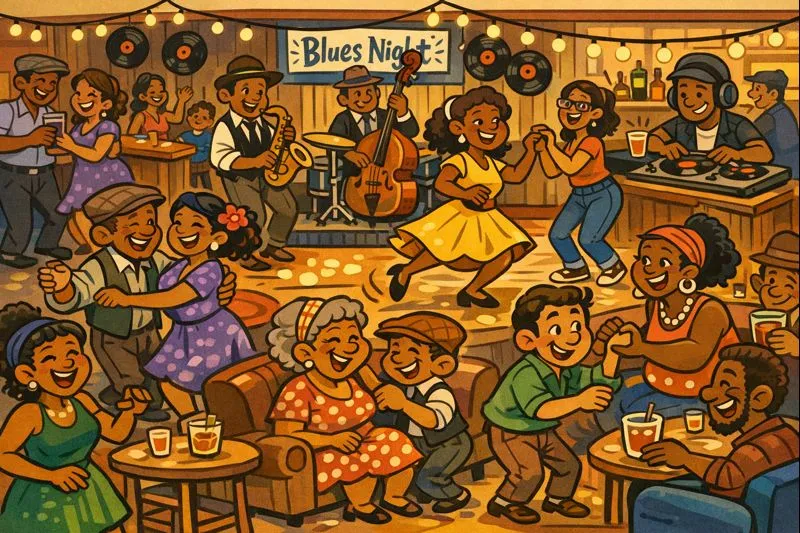
In many stories, photos and videos of Black social dance spaces, we see kids, elders, beginners and very seasoned dancers sharing the same floor or circle.
People at different experience levels watch, cheer, respond, copy, try things, mess up, and still get invited back in which seems to be part of how rhythm, style and stories move between generations, not just something random.
When we mostly seek out “advanced” partners, we may have fewer chances to experience that mixed, learning-together atmosphere in our own scene.
Each One, Teach One
We often hear the phrase “each one, teach one” linked with Black community spaces, born in times when access to education, safety and resources was limited, so people passed knowledge and care directly to each other.
In social dance, that can mean someone who knows a bit more sharing patience, groove and clear connection with someone newer — not by lecturing, but simply by choosing to dance together.
When we avoid partners who seem less confident, we also move a little further away from that “each one, teach one” spirit.
What “Advanced” Means
In a more competitive mindset, an “advanced dancer” is the one who shines with other strong dancers, doing impressive things in the spotlight.
From African American dance perspectives we’ve listened to, an advanced dancer can also be someone who holds the groove, honors the music, and helps many different people feel included, safe and alive in the room.
Both views exist for us, but when we mostly seek advanced partners, we get fewer chances to practice this second kind of “advanced” — the one about how we affect the whole room, not just our own highlight.
Groove Over Tricks
African American vernacular dances grow from Black musical traditions like blues, jazz and gospel, where groove, rhythm and call-and-response are central, and the dance becomes a conversation between dancers, musicians and everyone in the room.
Dancing with someone newer might invite us to slow down, simplify and listen more deeply, sitting together in that shared groove instead of chasing complex variations.
Seen this way, moving more simply isn’t “wasting” a song, but training the part of the dance most connected to its musical and cultural roots.
Needs and Responsibility
Our bodies, emotions and limits still matter. We can’t dance with everyone, and we don’t have to — boundaries, consent and safety are part of any healthy community, including Black social dance spaces.
For us, bringing in these cultural perspectives doesn’t mean “always say yes”, but asking: how do we balance our wish for challenge and expression with care for the wider circle that keeps this dance alive?
One small way we’re trying is: some dances with close friends, and some we consciously offer to people who are newer or more quiet, to keep the circle a little more open.
We Are Still Learning
We are still learning, and we don’t speak for all African American dancers or communities. Listening to people who carry these traditions invites us to look again at our choices on the floor.
If we only dance with “advanced” dancers, we may gain skill and exciting moments, but slowly lose some of the community spirit, resilience and shared joy that shaped this dance.
How do you balance dancing for your own growth and for your community?
Feel free to share your thought 💌
Join the Inner Circle
Receive occasional updates on our global tours, workshops, and exclusive teaching insights.